Within seconds of an avalanche being triggered, tonnes of snow can surge down a slope reaching speeds of over 100km an hour. This immense force of nature can be fatal. Backcountry avalanche terrain is neither patrolled nor controlled by professionals, so if you’re planning to go beyond the ski area boundary into the backcountry, it’s vital to be well trained in avalanche safety and rescue techniques, no matter what the time of year. This is equally important for skiers, boarders, climbers, trampers and hunters.
Improve Your Avalanche IQ
|
The Avalanche Tips and Terms: From the forecast to the field video series breaks down essential knowledge you need for avalanche safety – from the basics of avalanche terminology, to interpreting the NZAA forecast, recognising problem terrain and making safe decisions in the mountains. Find out more and watch it here.
Prepare for Your Trip
- Plan your trip route thoroughly
- Check the weather
- Check the avalanche advisory at www.avalanche.net.nz
- Anticipate what conditions you may encounter and adjust your plans accordingly
- Watch and learn about trip planning and preparation
Three Components of Avalanche Safety
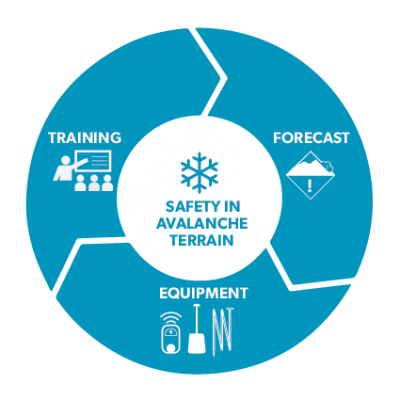
To be avalanche aware, you need to cover the three key components of avalanche safety before you head to the backcountry.
1. Get the training
You need to have the necessary skills and training to identify and avoid avalanches, and rescue others if things go wrong.
- Learn key avalanche terms and what they mean in our Avalanche Tips and Terms video series.
- Take our Online Avalanche Course to learn the basics of avalanche awareness and how to reduce risks in avalanche terrain.
- Attend an avalanche awareness course.
2. Get the forecast
The current weather forecast and avalanche advisory for your region are essential for your decision-making, including whether or not you go. The New Zealand Avalanche Advisory (NZAA), provided by the Mountain Safety Council, is integral for anyone planning on travelling in backcountry avalanche terrain for recreation. At avalanche.net.nz you will find a danger rating, a description of the most likely avalanche problems you will come across, insight into recent avalanche activity, a description of the snowpack and more. NZAA and MSC recommend checking the mountain weather forecast provided by MetService as part of your trip planning.
- Learn about weather conditions in our Avalanche Tips and Terms video series.
3. Take the right equipment
In the event of an avalanche rescue, you need the equipment to save your own or someone else's life. Carry an avalanche transceiver, probe, and metal-blade shovel, and know how to use them.
- Learn about avalanche rescue equipment in our Avalanche Tips and Terms video series.
When in Avalanche Terrain
Avalanche terrain is anywhere where there is a slope steep enough for an avalanche to occur, or directly below terrain of this nature. If you haven't done any training, you might not even know you're in it!
While you are out in avalanche terrain, it will take your skills and concentration to analyse the snowpack using recommended tests and observations to assess the likelihood of an avalanche being triggered. Check your surroundings for recent avalanche activity, changes in terrain, snowpack and weather. Learn how to recognise avalanche terrain, and when an instability exists, know how to avoid the problem.
Watch our Avalanche Tips and Terms video series and learn about:
Avalanche Rescue Techniques
Even with the forecast, conservative decision-making, and careful route planning, you might need to apply your rescue techniques in the event of an avalanche. Watch the video below to learn what this might entail and book a practical course to learn how to save a life using this specialist equipment.
- Learn about avalanche rescue techniques in our Avalanche Tips and Terms video series.
What To Do Next
Continue your education in avalanche safety with our online resources and useful links.
Explore Our Resources
- Watch our Avalanche Tips and Terms 23-part video series | Plus see our other avalanche safety videos
- Find a course | Find the suitable course provider to continue your learning in avalanche safety
- Take our Online Avalanche Course | Learn the basics of avalanche types, factors and how to reduce risks in avalanche terrain
- Find out about avalanche incidents | See our in-depth report on avalanche incident data over 25 years
- Use Plan My Walk | Our free planning tool will help you choose tracks, get avalanche forecast alerts, build a gear list and share your plan with others before you go.